Is Palo Alto still a seller’s market, or has the balance shifted? If you are eyeing Old Palo Alto or nearby neighborhoods, you are likely weighing big decisions in a market that moves fast and values street-by-street nuance. You want clear, practical guidance that helps you time your move, set the right expectations, and avoid costly missteps. In this guide, you will learn how Old Palo Alto differs from other pockets, what drives prices, how seasonality plays in, and which signals to watch before you buy or list. Let’s dive in.
What makes Palo Alto unique
Palo Alto is a high-cost, low-inventory market with strong long-term appreciation. Demand is shaped by proximity to Stanford and major tech employers, high household incomes, and the draw of the local public school system. Supply is constrained by small parcels, strict zoning in many single-family areas, and limited new-build sites. That combination keeps prices sensitive to even small changes in buyer demand.
Inventory has been tight compared with national averages. From mid-2022 through mid-2024, many Bay Area submarkets softened from pandemic peaks, with more listings and slower turnover in some segments. Even so, premium single-family homes in Palo Alto stayed relatively scarce, especially in established northside neighborhoods.
Old Palo Alto vs other pockets
Palo Alto is a collection of micro-markets. Lot size, architectural character, and even the block face can shift pricing within a few streets. Here is how Old Palo Alto compares to nearby areas.
Old Palo Alto overview
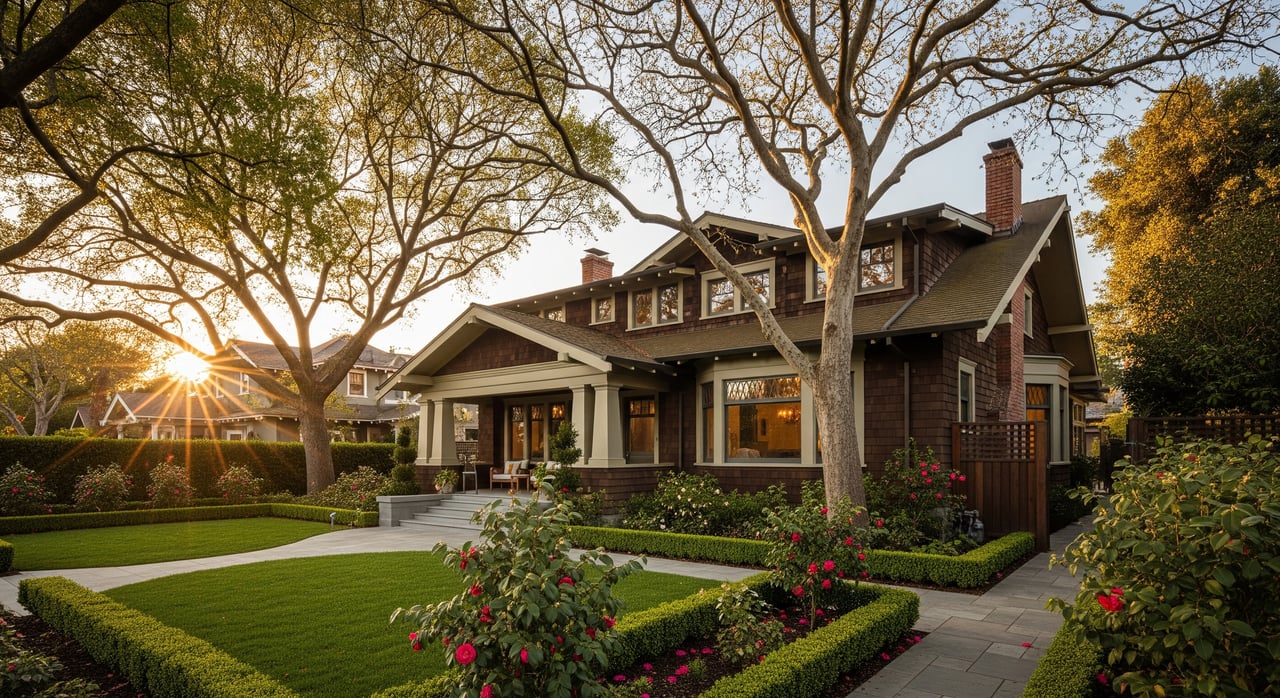
Old Palo Alto is defined by larger lots, mature street trees, and early 20th-century architecture. Buyers often pay for lot size, curb appeal, and the potential to remodel or rebuild. As of mid-2024, detached single-family homes typically traded in the approximate 4 million to 10 million plus range, depending on lot size, condition, and street. Sales are infrequent and highly price sensitive because supply is so limited.
Crescent Park and Professorville
These areas are also highly desirable with distinct architectural character. Pricing generally sits in a high tier, often below the very top range of Old Palo Alto but still premium for the city. Street identity and school zone boundaries contribute to value. As in Old Palo Alto, comps should be pulled very close to the subject street for accuracy.
Midtown, Green Acres, Barron Park, Ventura
These neighborhoods feature more modest lot sizes and more post-war housing stock. Turnover is more frequent than in Old Palo Alto. As of mid-2024, many single-family homes sold in the roughly 2 million to 4 million range, with updates and location influencing the spread. Buyers here often seek more home for the money and are willing to renovate.
South Palo Alto and condo pockets
South Palo Alto includes older ranch homes, townhomes, and condos with a wider price spread. Many condos and smaller single-family homes were in the approximately 1.5 million to 3 million range as of mid-2024. Price per square foot is generally lower than in north Palo Alto, though still high for the region.
Seasonality and timing
Spring is usually the strongest season for new listings and buyer activity. March through May often delivers quicker sales and stronger list-to-sale ratios. Summer can remain active, though buyers may be more selective. Fall typically slows, and winter is the quietest period with fewer listings and fewer active buyers. In very tight inventory conditions, seasonality can be muted, and quality listings can perform well any time of year.
How demand and supply move prices
Palo Alto buyer demand is influenced by local employment trends, mortgage rates, and family decisions tied to school attendance areas. Shifts in remote work policies, international relocation, and currency factors can also move the needle. On the supply side, zoning limits and longer permitting timelines hold back new single-family inventory. Where new construction does occur, it often comes as higher-end custom rebuilds rather than middle-market additions.
In markets with tight supply, a modest drop in mortgage rates or an uptick in buyer confidence can create outsized price movement. Conversely, rate increases or tech layoffs can extend days on market, especially for higher-end listings with smaller buyer pools.
What buyers should expect in Old Palo Alto
Buying in Old Palo Alto is about securing the right lot and street, not just the house. Be ready to evaluate potential and plan for a remodel or rebuild if that fits your goals. Days on market lengthened in many segments from 2022 to 2024 compared with the pandemic peak, but well-priced, updated homes still draw strong interest.
Use these tips:
- Tighten comps to the immediate block or similar lot class. Street-to-street differences can be meaningful.
- Ask your agent to track pending-to-active ratios and backup offer activity. That shows how fast the market is absorbing listings.
- Prepare your financing early. Cash, bridge options, or rate buydowns can help you compete in micro-markets with multiple offers.
- Review recent permit activity. Nearby rebuilds can hint at buyer preferences and future neighborhood character.
What sellers should know in Old Palo Alto
Pricing and presentation matter. Luxury and very high price points can take longer because the buyer pool is smaller. Aim for the spring window when possible, but exceptional lots or architecturally significant homes can sell well year-round with the right marketing.
Smart steps for sellers:
- Choose comps within a tight radius that match your lot size, architectural class, and condition. Do not rely on citywide averages.
- Leverage targeted prep and tasteful updates. Even small improvements can expand the buyer pool and improve your net outcome.
- Stage to highlight lot and indoor-outdoor flow. Buyers often pay premiums for curb appeal and usable yard space.
- Watch active competition. If similar homes are sitting or cutting price, calibrate rather than assume peak list-to-sale ratios.
Key metrics to watch monthly
Track these indicators at the neighborhood level when possible. They help you decide whether to act now, wait, or adjust pricing.
- New listings vs active inventory. Rising on both can signal easing conditions.
- List-to-sale ratio. At or above 100 percent suggests seller leverage. Below 95 percent suggests room for negotiation.
- Days on market and price reductions. Increases can indicate cooling.
- Pending-to-active ratio. Higher ratios point to quicker absorption.
- Price per square foot by micro-market. Do not compare Midtown to Old Palo Alto without adjustments.
- Permit activity. More applications can foreshadow future inventory, though with long lags.
- Local job news. Employer expansions or layoffs can shift buyer pools quickly.
Where prices might head next
Short-term direction depends on mortgage rates, inventory, and tech hiring. If rates ease and new listings remain scarce, prices can firm quickly in tight submarkets like Old Palo Alto. If rates rise or hiring softens, expect longer marketing times at the higher end and more negotiation room. Over the longer term, limited land, zoning constraints, and the local economy support steady demand relative to supply.
How a hands-on approach helps
In a micro-market like Old Palo Alto, little details add up. Align your plan with neighborhood reality, not citywide headlines. If you are buying, focus on lot quality, block appeal, and rebuild potential. If you are selling, invest in high-impact prep and position your home against the right comps. That is how you protect your time and your outcome.
When you are ready, get a tailored plan that fits your street, your timing, and your goals. Request a Free Home Valuation with Unknown Company and map the next steps with a local, hands-on strategy that puts your interests first.
FAQs
What does Old Palo Alto pricing typically look like?
- As of mid-2024, many detached homes in Old Palo Alto traded around 4 million to 10 million plus, with lot size, condition, and street driving the spread.
How fast do Palo Alto homes sell today?
- Days on market are longer than the 2020 to 2021 peak, with mid-market homes moving faster than very high-end listings due to a larger buyer pool.
Is spring the best time to list in Palo Alto?
- Spring usually brings more buyers and stronger list-to-sale ratios, although unique or exceptional properties can perform well any time with focused marketing.
Should buyers expect multiple offers in Old Palo Alto?
- Well-priced, updated homes in tight micro-markets can still attract multiple offers, while higher-priced or renovation-heavy homes often allow more negotiation.
What signals should I watch before I act?
- Track list-to-sale ratios, days on market, price reductions, pending-to-active ratios, and neighborhood-level comps rather than citywide averages.
What drives long-term value in Palo Alto?
- Constrained single-family supply, proximity to employers, and sustained household incomes support demand, while zoning and permitting limit new inventory.