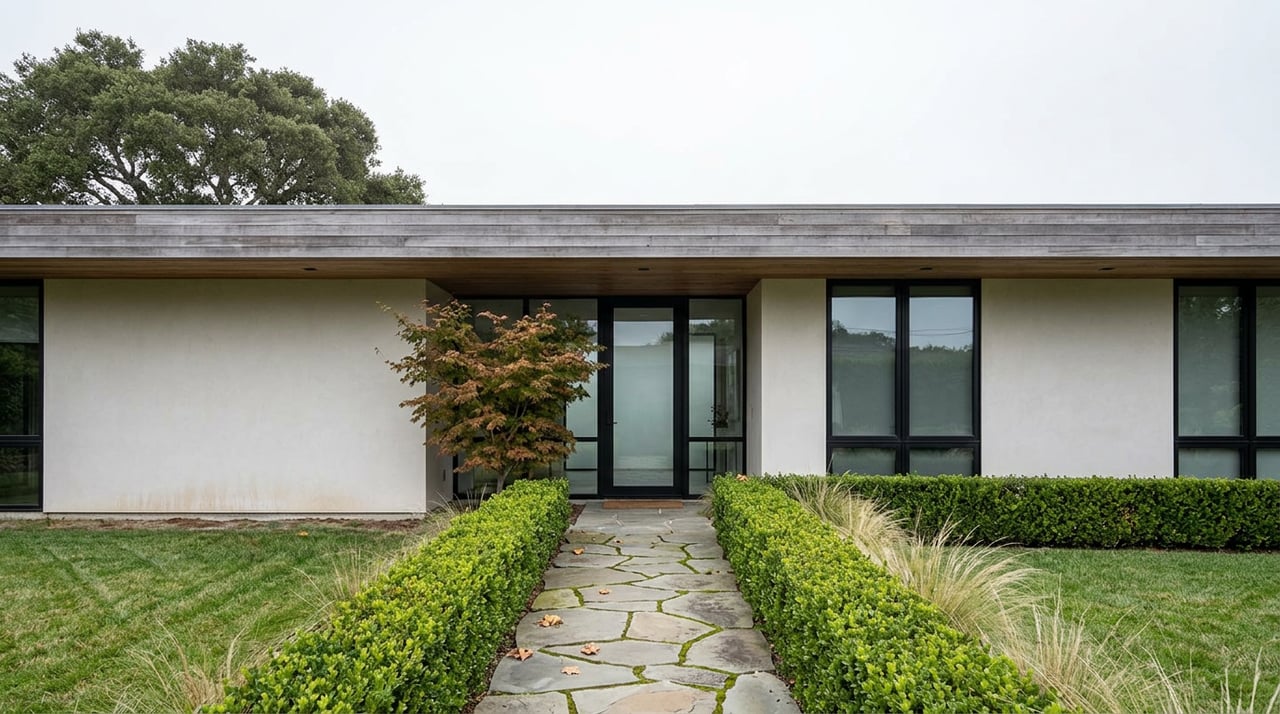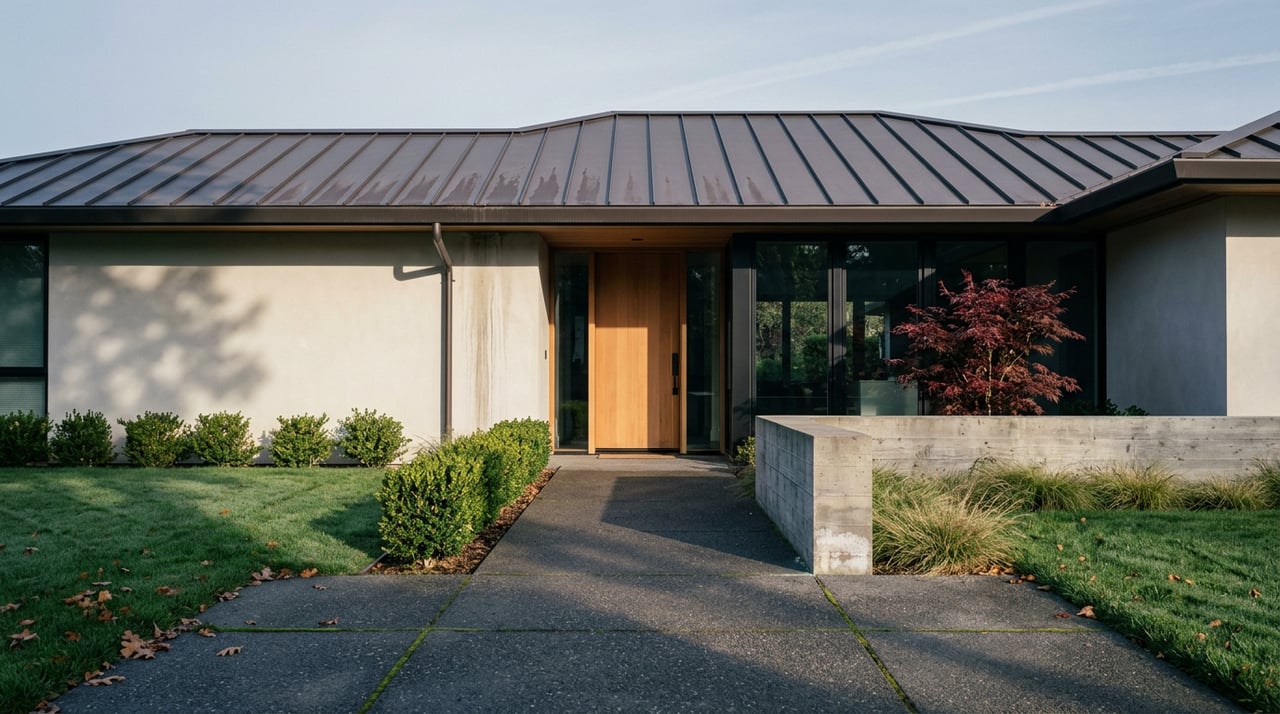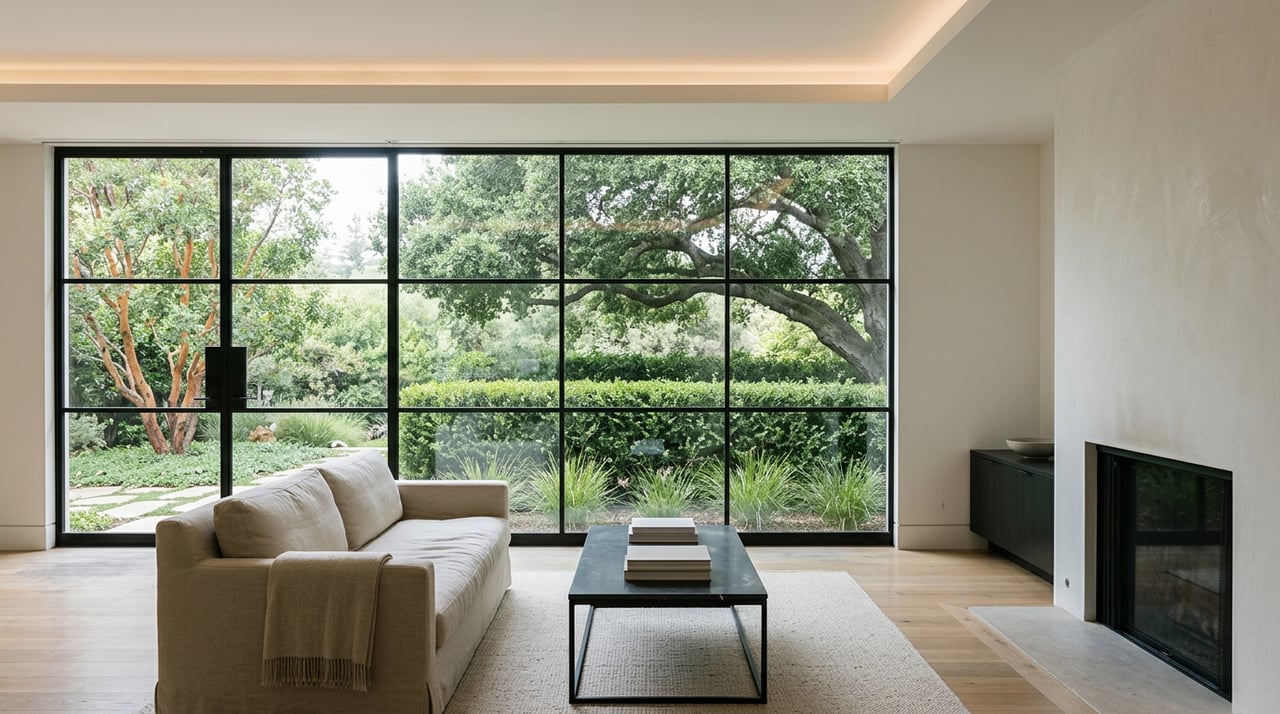
Walk into almost any Eichler in Greenmeadow or Fairmeadow on a January morning and the first thing you notice is the floor. It is warm in a way that has nothing to do with sunlight, an even, quiet heat rising straight up through the concrete because the pipes carrying it are inside the slab itself. It is one of the most loved features of Joseph Eichler's homes, and it is also the single largest piece of unfinished business in almost every Palo Alto Eichler transaction.
Most buyers and sellers treat the radiant system as a maintenance question: does it work, does it need a new boiler, is it worth keeping. That framing misses where the real friction sits. The question that actually decides how smoothly escrow closes is not whether the heat works today. It is what happens to the timeline the moment an inspector flags the slab itself, because a compromised slab does not stay a plumbing problem. It becomes a lending problem.
What's Actually Under the Floor
Eichler's radiant heat is a hydronic system: a boiler heats water, and that water circulates through pipes embedded directly in the concrete slab beneath the living space. Many of the original runs in Palo Alto's older tracts are copper, installed decades before anyone was thinking about soil chemistry or seismic shifting. Copper corrodes over time, and the expansive clay soils common across the Peninsula put steady stress on anything buried and rigid. The result, eventually, in enough of these homes to matter, is a slab leak.
Specialists who work on these homes regularly recommend something a general home inspector will not always think to do: bring in a separate hydronic specialist to check boiler age, test the zone valves, and run an actual leak detection test on the loop, distinct from the standard whole-house inspection. That separation matters because a general inspector can confirm the heat turns on. Only a specialist can tell you whether the slab underneath it is quietly failing.
Two Very Different Repairs, Two Very Different Bills
Once a leak is confirmed, the fix isn't one thing. It is a decision tree, and each branch carries a different price tag and a different amount of disruption.
| Repair path | What it involves | Typical cost range |
|---|---|---|
| Leak detection | Acoustic or infrared testing to locate the leak | $150 to $600 |
| Spot repair | Breaking through the slab at one point to access and fix the pipe | $600 to $4,000 |
| Reroute | Abandoning the damaged line and running new pipe through the attic or walls | $4,000 to $15,000 |
| Full slab replacement | Removing and repouring the concrete after extensive or repeated damage | $5,400 to $10,800 |
Those figures come from national contractor cost data, and Bay Area labor rates tend to land bids toward the top of every one of those ranges. The gap between a spot repair and a reroute is not academic. It is the difference between a homeowner writing a modest check before the holidays and a seller watching a closing date slide by six weeks.
Why a Small Leak Becomes a Lender's Problem
Here is the part that catches people off guard. A cracked or leaking slab does not read to a lender as a plumbing item. It reads as a structural and moisture concern, and once it's flagged that way, the response is no longer just a seller credit or a repair receipt. Lenders can and do require that the underlying issue be resolved, not merely disclosed, before they'll fund. A single-point spot repair might satisfy that. A slab with multiple leak sites or visible cracking often will not, and the lender's answer becomes the full reroute, on the seller's or buyer's timeline, not the market's.
That is the mechanism worth understanding before you ever list an Eichler or write an offer on one. The cost isn't the risk. The risk is discovering, twenty days into escrow, that what looked like a $2,500 fix is actually a mandatory $12,000 reroute that has to be complete and inspected before anyone's loan funds.
A patched pipe under a new floor is not the same thing as a resolved slab, and lenders increasingly know the difference.
The Renovation Wrinkle Palo Alto Adds on Top
Say the reroute is done and the slab is sound. The next instinct, especially for a renovation-minded buyer, is to ask what else can be done while the floors are already open. This is where Palo Alto's own zoning history adds a layer most out-of-town buyers never see coming.
Palo Alto pioneered single-story overlay zoning specifically to protect its Eichler tracts from second-story additions. Los Arboles was the first, approved by the City Council in 2015 after 80 percent of homeowners in the neighborhood petitioned for it. Greer Park North and Royal Manor filed their own applications for the same protection around the same time, and homeowners in Greenmeadow, Fairmeadow, and Faircourt have since made informal inquiries about doing the same. A more recent building guide to Palo Alto's residential rules, updated this past February, confirms the pattern still holds in neighborhoods like Greenmeadow and Green Gables today. If your Eichler sits inside one of these overlay districts, a second story isn't a design choice you're free to make. It's legally off the table, regardless of what your architect draws.
Layer onto that the fact that Greenmeadow and Green Gables both carry National Register Historic District status, which adds its own design review step for exterior changes, and the honest answer to "can I add square footage" becomes tract-specific, not citywide. Two-story additions elsewhere in Palo Alto's R-1 zones of 150 square feet or more trigger either the city's Objective Design Standards, adopted in February 2025, or the older Individual Review process, and residential plan check currently runs 8 to 16 weeks. None of that is a reason to avoid an Eichler. It is a reason to know which tract you're standing in before you make a renovation promise to yourself or a client.
Which Tract, Not Which Website, Has the Answer
One more reason to verify locally rather than trust the first search result: even specialist Eichler sites can't agree on how many of these homes exist in Palo Alto. Some cite around 250. Most, including several dedicated Eichler resources, put the number at over 2,200 to 2,700. That's not a rounding error, it's a sign that a lot of what circulates online about these homes is copied and recirculated rather than checked. The city of Palo Alto maintains its own Eichler tract map showing which subdivisions carry single-story overlay protection and which sit inside the two National Register districts. If you're serious about a purchase or a renovation plan, that map, not a real estate blog's aggregate count, is the document worth pulling up.
What a Full Restoration Actually Looks Like
For a sense of what the far end of "restored" can mean for one of these homes, look north to the Eichler X-100 in the San Mateo Highlands, which came on the market this past spring after an extensive restoration returned it to something close to its original 1956 form. It was Eichler's experimental steel-framed house, built to show off industrial construction methods rather than the wood post-and-beam system used everywhere else, and the scope of work needed to bring it back to its original vision touched the structure itself, not just the finishes. Most Palo Alto Eichlers will never need restoration on that scale. But the project is a useful marker for how differently a fully resolved system reads to a buyer compared with one that's been quietly managed for decades.
What This Means If You're Listing or Buying
If you're preparing to sell an original-condition Eichler, get the hydronic specialist inspection done before you list, not after an offer comes in. Knowing your slab's condition lets you price and disclose from a position of knowledge rather than reacting to a buyer's inspector under deadline pressure.
If you're buying with renovation plans already in mind, check your target tract against the city's overlay map before you fall in love with a second-story sketch. And if the slab does need work, budget and negotiate for the reroute scenario, not just the spot repair, because that's the number a lender is more likely to hold you to.
These homes reward patience and specific knowledge more than almost anything else in Palo Alto's housing stock. Getting the slab and the zoning right before you commit is what turns an Eichler purchase into the value-adding project it's capable of being, instead of an expensive surprise.
If you're weighing a sale or a purchase involving one of Palo Alto's Eichler homes and want a second set of eyes on what the slab, the tract, and the zoning actually mean for your plans, Tom Correia has spent years managing exactly this kind of renovation-driven transaction on the Peninsula. Request a free home valuation to start the conversation with real numbers, not guesswork.
Frequently Asked Questions
Does every Eichler in Palo Alto eventually need radiant system work? Not every home, but age and pipe material both raise the odds. Original copper installations from the 1950s and 1960s are the ones specialists watch most closely, and a leak detection test before listing or before writing an offer is the only way to know where a specific home stands.
Can I still get a loan if the radiant system isn't working? Often yes, but expect the lender's underwriting to hinge on whether the slab issue is classified as cosmetic or structural. A confirmed, resolved repair with documentation tends to move through underwriting far more smoothly than an open, undiagnosed leak.